
Blind Transfers: What College Athletes Need to Know Before the NCAA Votes
- Cedric Hopkins

- Mar 31
- 6 min read
You’ve probably heard the term “blind transfer” by now. If you haven’t, you need to. Because the NCAA is about to vote on emergency legislation that could seriously affect your options if you ever decide to leave your school outside of the January transfer portal window, and the penalties being discussed are steep.
Here’s what’s happening, what it means for you, and what the legal landscape looks like as this plays out.
First, What’s a Blind Transfer?
A blind transfer happens when an athlete unenrolls from their current school and enrolls at a new university without going through the official NCAA transfer portal. It’s called “blind” because the athlete bypasses the system entirely, the NCAA and everyone else can’t see it coming through normal channels.
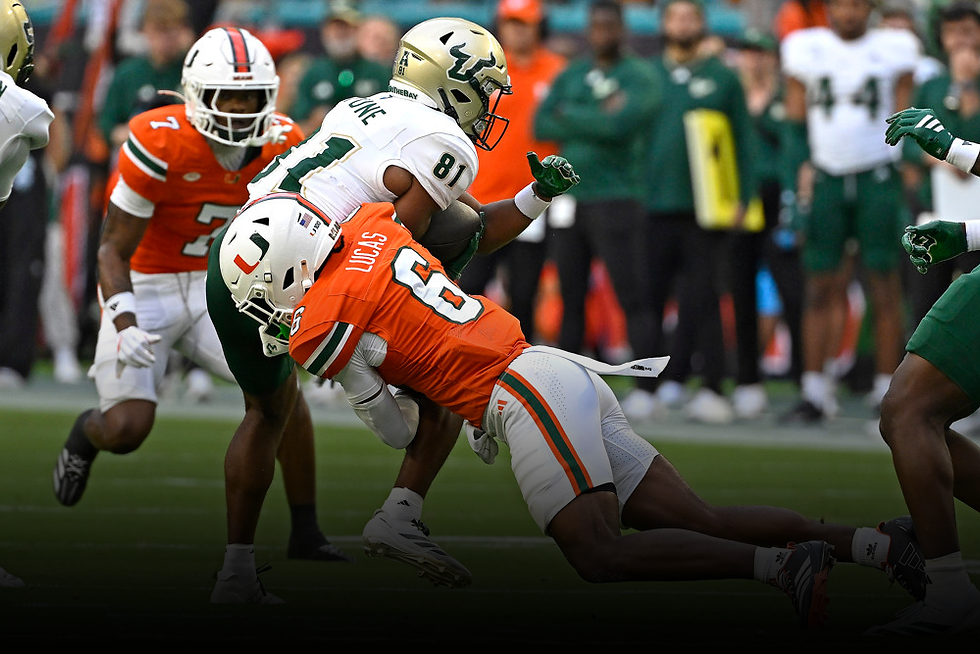
The most high-profile example happened last year. Wisconsin cornerback Xavier Lucas, a standout freshman who posted 18 tackles and an interception in seven games, withdrew from classes at Wisconsin and enrolled at Miami in January. He didn’t enter the transfer portal. He just left. That move sent shockwaves through college football and, frankly, exposed a gap in the NCAA’s transfer rules that a lot of athletes and programs didn’t know existed.
What the NCAA Is About to Vote On
The NCAA Division I Cabinet is meeting on April 1 to vote on emergency legislation targeting blind transfers, like the one Lucas did. This meeting was added to the calendar specifically to get something on the books before most FBS programs wrap up spring practices.
A little background on the NCAA governance: The NCAA Division I Cabinet is the governing body responsible for day-to-day decision-making in Division I athletics. Think of it less like the Congress you know, and more like a board of directors made up of conference representatives, athletics directors, and faculty, all people from inside college sports who set the rules for college sports.
Unlike a state law, which goes through elected legislators, public hearings, and a governor's signature, NCAA legislation is proposed, debated, and voted on entirely within this internal structure. No public vote. No outside oversight. The schools and conferences are essentially making the rules for themselves.
The two most recent significant pieces of legislation the Cabinet passed:
In October 2025, the Cabinet adopted emergency legislation modifying the football transfer window from two transfer windows to one window consisting of 15 consecutive days running from January 2 through January 16, which is the exact window at the center of the blind transfer debate.
In January 2026, the Cabinet voted to approve jersey patch sponsorships, allowing schools to place up to two additional commercial logos on uniforms and one additional logo on equipment during the preseason and postseason, effective August 1, 2026.
Now, the Cabinet is voting to restrict athlete movement, and the proposed penalties are significant.
If a school adds a blind transfer, the head coach would be prohibited from all football and administrative duties for six games. The school would also be fined 20% of its football budget. A previous version of the proposal also required the school to reduce its roster by five spots for the following season, but that provision has since been removed from the current proposal.
The context matters here.
As stated above, the NCAA recently moved from two transfer portal windows down to one: a 15-day window in January (in the midst of the College Football Playoffs). That’s it. No Spring portal. So if you miss that window, or if you decide you want to move after January, the blind transfer has been the only realistic path. The NCAA is now trying to shut that path down.
Why This Matters for You as an Athlete
If you’re a college athlete, this is your freedom of movement we’re talking about. You have the right to transfer schools. You have the right to pursue your education and your athletic career where you choose. These proposed penalties aren’t directly punishing you, they’re punishing the programs that take you.
But make no mistake: when programs face a six-game coaching suspension and a fine worth 20% of their football budget just for signing you, they’ll think twice about bringing you in outside the portal window. The penalty to the program becomes a practical barrier for you.
One Big Ten general manager put it plainly in a recent interview: if 15 high-profile players blind transfer before the season, it will be a “horrible look” for the NCAA and there might need to be a Spring portal. That’s a program administrator acknowledging that the current system is broken. The question is whether the NCAA fixes the right problem.
The Legal Side: What Lawsuits Are Coming, and Why
This legislation is going to get challenged in court. There’s no question. Here’s why, and here’s what the legal claims will likely look like.
Antitrust Claims
The strongest argument against this legislation comes from antitrust law, specifically the Sherman Antitrust Act, which prohibits agreements among competitors that unreasonably restrain trade.
The NCAA got a significant wake-up call in 2021 when the Supreme Court ruled against it unanimously in NCAA v. Alston. The Court said the NCAA’s restrictions on education-related benefits violated antitrust law. And Justice Kavanaugh wrote separately to signal that the NCAA’s broader amateurism model was on thin legal ice.

Here’s how the blind transfer legislation fits into that picture. Member schools are, in a competitive sense, competitors for talent. When the NCAA creates rules that restrict where an athlete can go, and punishes schools for accepting that athlete, it’s coordinating competitor behavior in a way that limits the athlete’s ability to sell their labor in a free market. The legal argument is that this is a restraint of trade.
The key question courts would ask is whether the restriction serves a legitimate purpose that outweighs the competitive harm (that’s the Rule of Reason test). The NCAA will argue that roster stability, competitive balance, and the integrity of the sport justify the rule. But after Alston, those arguments carry less weight than they used to. Courts are no longer giving the NCAA a free pass just because it calls something a “rule of the sport.”
The penalties structure makes this worse, not better, for the NCAA.
A 20% budget fine for accepting a transfer isn’t just a deterrent, it’s a market-distorting mechanism that makes athletes with blind transfer status effectively untouchable. That’s the kind of coordinated restraint that draws antitrust scrutiny.
Equal Protection Claims
There’s also a potential equal protection argument worth watching. The Fourteenth Amendment’s Equal Protection Clause says the government can’t treat similarly situated people differently without a legitimate reason.
Now, this gets complicated because the NCAA is a private organization, not a government actor. Equal protection claims typically require state action. But there are two paths where this theory could gain traction.
First, some states have passed NIL legislation that includes anti-discrimination provisions. If blind transfer penalties effectively disadvantage athletes from certain backgrounds, for example, athletes who didn’t have the resources, representation, or information to use the January portal window effectively, there’s an argument that the rule has a disparate impact on a protected class.
Second, there’s a state action argument to be made at public universities. When a public university enforces NCAA rules, it is arguably acting under color of state law. Athletes at public schools challenging these restrictions may have standing to bring constitutional claims directly. This argument hasn’t fully succeeded before, but the post-Alston legal environment makes it worth watching.
What Schools and the NCAA Can Do to Address This
Here’s where I think the smarter path lies. If the goal is genuinely to protect roster stability while also protecting athlete rights, there are real solutions available.
Open a spring transfer portal window. The Big Ten GM who spoke to On3 is right. A short spring window -- even 15 to 30 days -- would give athletes a legitimate path to move after the season. Right now, the January window is so narrow and so poorly timed for athletes in the middle of the academic year that many simply can’t use it effectively. The blind transfer is, in many cases, a symptom of a broken system, not athlete misconduct.
Standardize the unenrollment process. Right now, blind transfers work because there is no rule requiring an athlete to use the portal before unenrolling. Close that gap with a clear procedural requirement, not a financial penalty on the receiving school, that keeps the process transparent without restricting movement.
Connect athletes with proper legal and advisory resources. A significant portion of athletes who circumvent the portal do so because they don’t fully understand the rules, they don’t have representation, or they’re in a bad situation and acting quickly. Athletic departments and compliance offices that invest in real education, not fine print distribution, but actual workshops and resources, will see fewer athletes resorting to workarounds.
Revisit the penalty structure. Punishing schools so severely that they won’t touch a blind transfer athlete doesn’t fix the problem. It just creates a class of athletes who are effectively blacklisted. If the NCAA’s goal is to manage roster chaos, it should work on the process, not create market barriers that harm athletes the most.
The vote happens April 1. Whatever the NCAA decides, litigation is likely to follow.


Comments